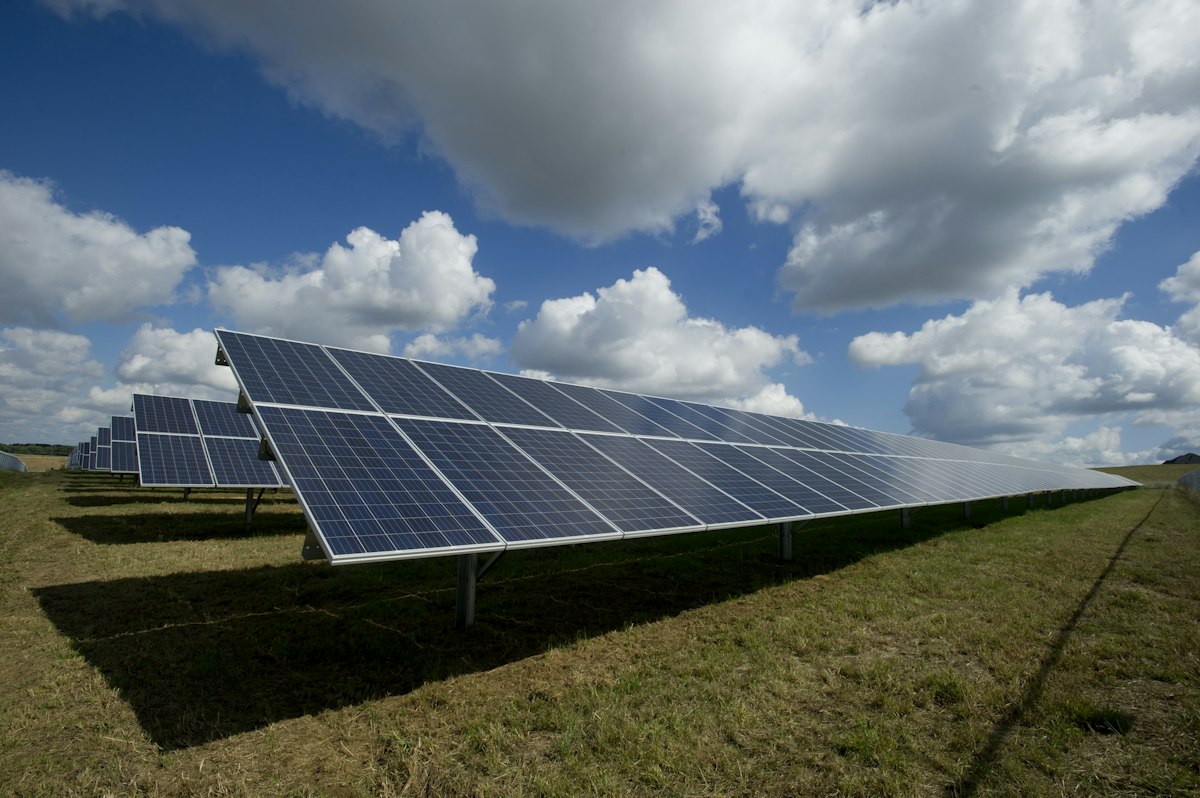
What Are Solar Panels and How Do They Work?
\nSolar panels — also called photovoltaic (PV) panels — convert sunlight directly into electricity. Each panel is made up of dozens of solar cells containing silicon. When photons from the sun strike the silicon, they knock electrons loose, creating a flow of direct current (DC) electricity. An inverter then converts that DC power into the alternating current (AC) your home appliances use.
\nModern residential panels typically convert 18–22% of sunlight into usable electricity. While that sounds modest, a well-sized system can cover 80–100% of an average household's annual energy consumption.
\n\nTypes of Solar Panels
\nThere are three main types available for homes:
\n- \n
- Monocrystalline — Made from a single silicon crystal. Highest efficiency (19–22%), longest lifespan (25–30 years), best for limited roof space. Most popular choice for homeowners. \n
- Polycrystalline — Made from multiple silicon fragments. Slightly lower efficiency (15–18%), more affordable. Good budget option with a 20–25 year lifespan. \n
- Thin-Film — Flexible and lightweight, works better in low light. Lower efficiency (10–13%) but performs well in hot climates. More common in commercial installations. \n
How Much Do Solar Panels Cost?
\nIn 2026, the average cost of a residential solar installation in Australia ranges from $3,000 to $12,000 after government rebates, depending on system size. A typical 6.6kW system costs around $5,500–$7,000 installed.
\nCost breakdown for a 6.6kW system:
\n- \n
- Panels: $2,000–$3,500 \n
- Inverter: $1,000–$2,000 \n
- Mounting hardware: $500–$800 \n
- Installation labour: $1,000–$1,500 \n
- Electrical work and permits: $500–$1,000 \n
Calculating Your ROI
\nReturn on investment depends on your electricity rates, how much sun your roof receives, and your system size. Here's a simple formula:
\nAnnual savings = (System output in kWh × Your electricity rate) + Feed-in tariff income
\nFor a typical Australian household using 20kWh/day with a 6.6kW system generating around 27kWh/day, annual savings often reach $1,500–$2,500. That puts payback period at 3–5 years — and panels last 25+ years.
\n\nIs Your Roof Suitable?
\nThe ideal roof for solar:
\n- \n
- Faces north (in Australia/Southern Hemisphere) or south (Northern Hemisphere) \n
- Has a pitch of 15–35 degrees \n
- Receives minimal shading from trees or neighbouring buildings \n
- Has enough space — a 6.6kW system needs roughly 35–40 square metres \n
Even east- or west-facing roofs can work well, often producing 85–95% of north-facing output. Shading is the biggest enemy of solar performance — even partial shade on one panel can reduce whole-string output.
\n\nGovernment Incentives in 2026
\nIn Australia, the federal Small-scale Renewable Energy Scheme (SRES) provides Small-scale Technology Certificates (STCs) that reduce upfront system costs — typically $1,500–$3,000 depending on your location and system size. Many states also offer additional rebates, interest-free loans, and feed-in tariff programs. Always check your state government energy website for current offers before getting quotes.
\n\nChoosing an Installer
\nOnly use Clean Energy Council (CEC) accredited installers in Australia. Get at least three quotes, check reviews on platforms like SolarQuotes, and ask about panel and inverter warranties separately. Panels typically carry a 25-year performance warranty; inverters usually 10 years.
\n\nNext Steps
\nSolar is one of the best financial and environmental decisions most homeowners can make in 2026. Start by using a free solar calculator to estimate your potential savings, then get 2–3 quotes from accredited local installers. Consider which panels offer the best value for your specific needs. For energy independence around the clock, pair your system with battery storage or a quality backup power solution like the EcoFlow Delta Pro.